As a long-time Apple II users I am quite familiar with the technique of generating color video by way of NTSC “artifact color” (also sometimes referred to as “composite color”). The 8-bit Apple II series is incapable of outputting any actual color pixels, so it takes advantage of idiosyncrasies of the NTSC composite video signal by displaying patterns of black and white pixels which are smeared together on-screen in a predictable fashion, resulting in colors that are not actually in the signal.
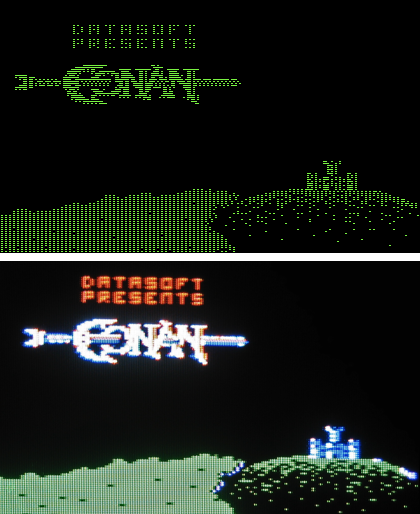
I’ve spent thousands of hours staring at the artifact colors of an Apple II display, but lately I’ve been exploring something that’s rather new to me: the world of IBM CGA (for Color Graphics Adapter) artifact colors.
I recently got turned on to the notion of putting together a little Tandy 1000HX system, so I looked around and over the Christmas holiday I found one for a very reasonable price on Craigslist, brought it home, and made a space for it in the Byte Cellar. It’s a lovely little machine with a lot of personality and it’s been fun putting through its paces. (I am about to install a variety of expansions to greatly increase its capabilities, and that will be the subject of a blog post to come.) Being a Tandy 1000, it features the enhanced graphics and sound capabilities that IBM introduced with the PCjr, and that puts it well beyond standard CGA as far as on-screen visuals for programs that support its enhanced video modes.
Back in the DOS days I was never much of a PC guy. I briefly drove a Tandy 1000TL in the late ’80s and, later, had the BridgeBoard A2088 PC-on-a-card in my Amiga 2000, so I was able to find a few old DOS floppies tucked away on the shelves. I’ve been firing these up on the HX and very few of what I have here support the PCjr/Tandy video modes and, so, I am reminded just how much I dislike standard CGA graphics. The typical palettes of cyan, magenta, white, black and red, green, yellow, black I have always found to be far less appealing than the Apple II’s 6-color hi-res (artifacted) palette.
Well, one of the games I had on floppy was Archon from Electronic Arts. I loaded it up and there was much cyan and magenta to be had on the RGB display, and things looked pretty busy with lots of pixel patterns making up dithered colors. Looking at the patterns, I recalled reading somewhere that it was a CGA game which utilized artifact color and that was written to be presentable both on an RGB monitor as well as via composite output. It occurred to me that the Tandy has a composite output, and the system was sitting next to my gaming TV which accepts composite, so I wired them up. I powered on the TV and, voila! I got my first taste of CGA artifact colors — and just how much better they looked than plain old RGB CGA!
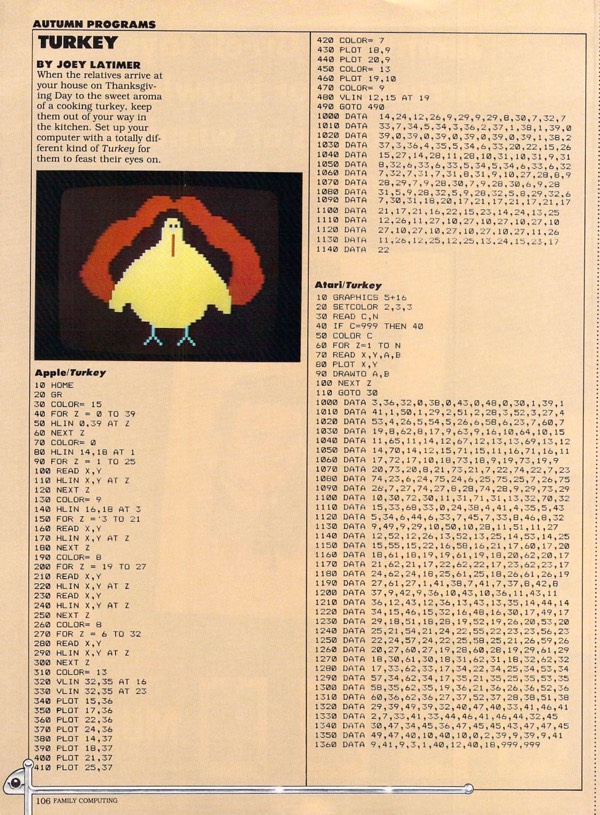
 ‘Tis the season, and that means it’s time to push out the eighth annual Byte Cellar vintage computer Holiday demo roundup so everyone can feel that warm, fuzzy, pixellated holiday glow. With scanlines. Enjoy!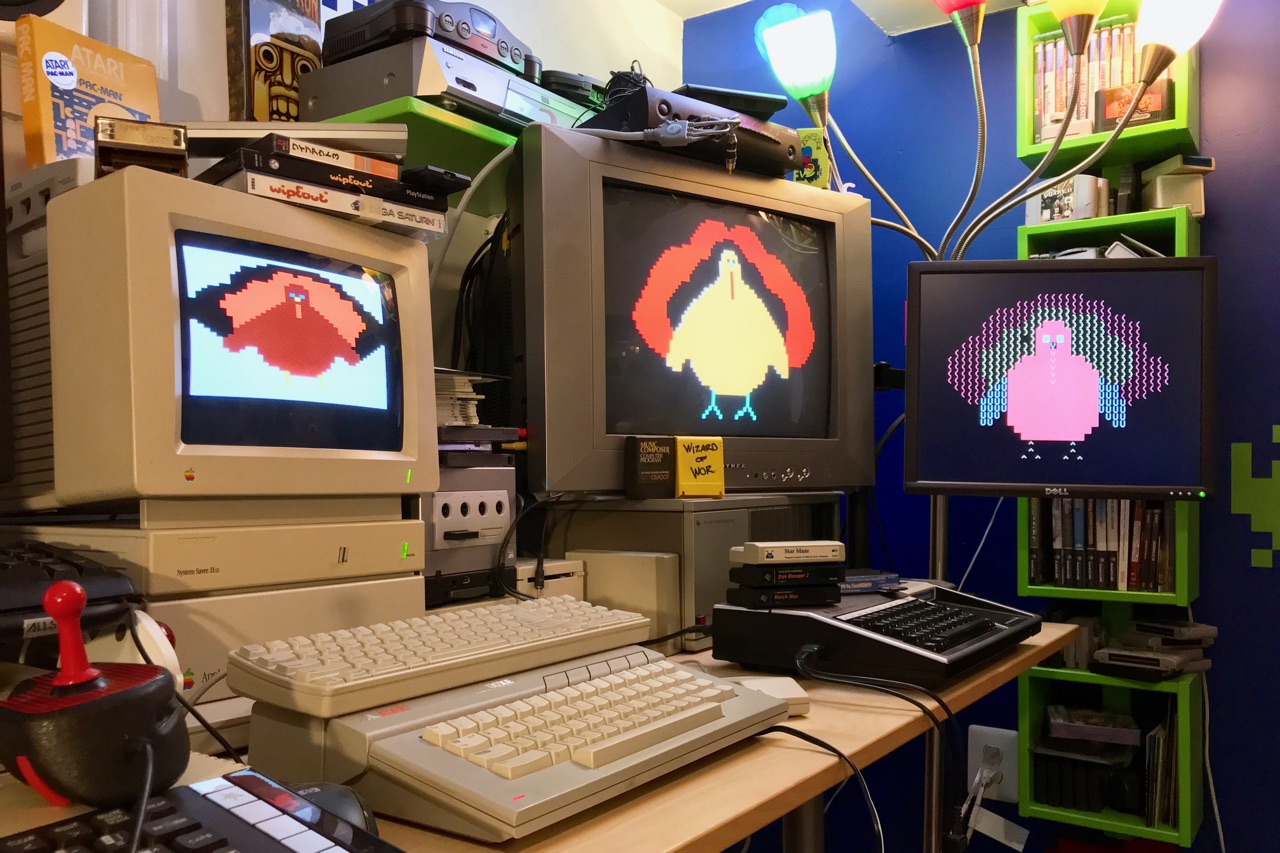
 I was at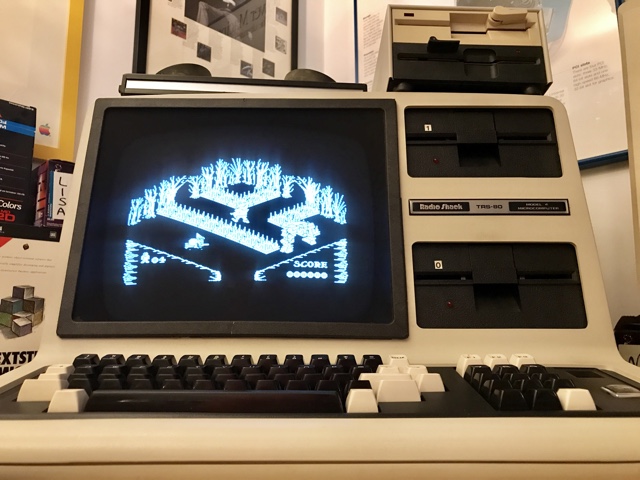
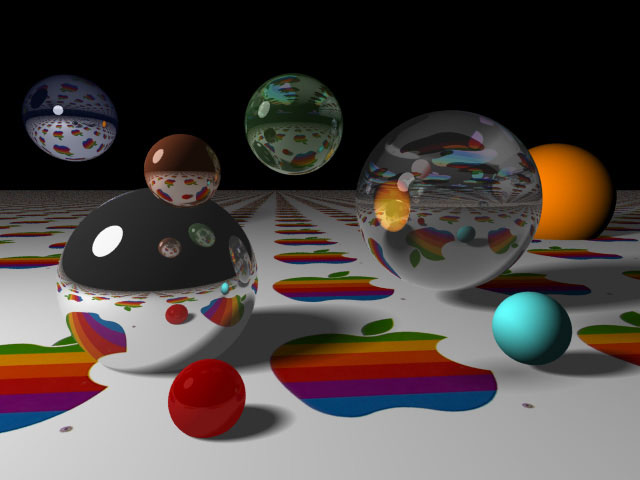 In the world of modern PC graphics hardware, all the buzz right now is about a rendering technique call ray tracing. This is mainly due to the release of
  Two years ago I downloaded No Man’s Sky on the Playstation 4 and inserted myself into its infinite universe for the very first time. August 9, 2016 was launch day for